
Why Are Your Lights Flickering? Causes & Fixes
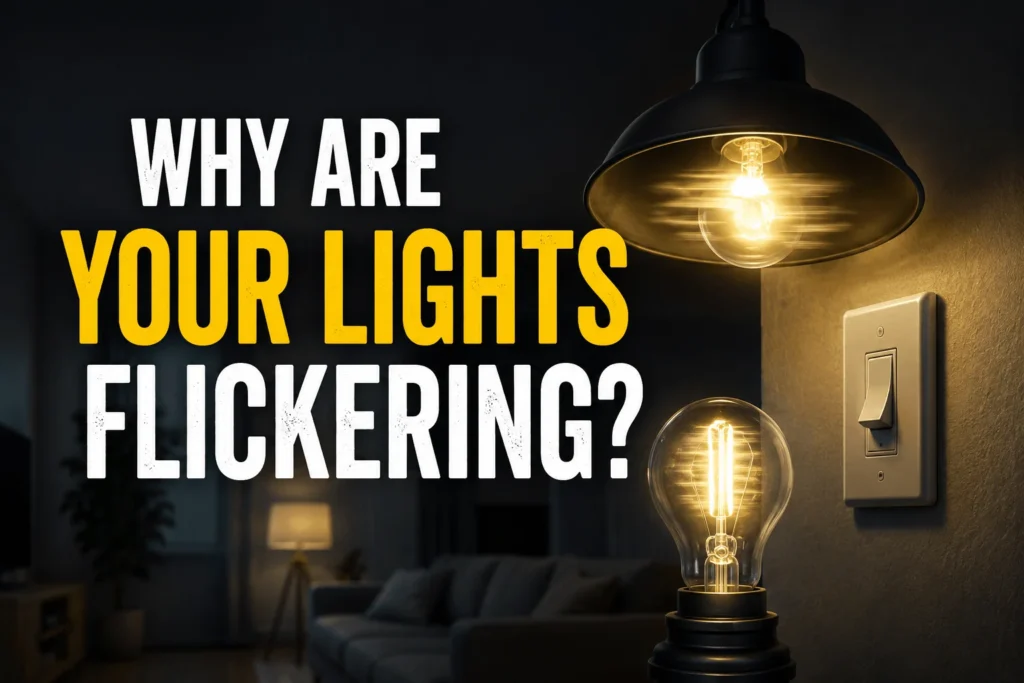
You are finally sitting down for a calm night when it happens: the ceiling light starts blinking like a disco ball. It is a total mood killer, but more importantly, it makes you ask a scary question: Is a flickering light dangerous? While the steady blinking is a common headache for many people, knowing the exact reasons for flickering lights is vital for keeping both peace and safety.
In this guide, we explore the main mystery: “Why are my lights blinking?” While some fixes are easy to do yourself, others act as fast warning signs of big electrical dangers. Whether you are facing small lights flickering in your home or need a pro for Lighting Fixture Installation in Kansas City, knowing when to check it yourself and when to call an Electrician in Kansas City can save your house from possible fire risks.
Simple Fixes: The “Check These First” List
Loose Bulbs
Usually, the easiest answer is the correct one. If you see your lights blinking, start with the most basic step. What to do: Turn off the switch, let the bulb cool down, and make sure it is twisted in tightly. One of the most frequent reasons why lights flicker is a loose bulb.
Type of Bulb (LED vs. Fluorescent)
There are some bulbs that naturally blink. It happens when you turn them on or sometimes when they do not fit with old fixtures.
Fluorescent tubes often flicker while they warm up, and some LED bulbs might pulse if they aren’t right for the socket. Knowing these small facts helps you understand why your lights are blinking. It also stops you from worrying that the flickering is dangerous when it is actually just the wrong type of bulb.
Dimmer Switch Incompatibility
Cheap LED bulbs often blink if you use them with a regular dimmer switch because the power level isn’t steady. Modern lights need a specific match: old “leading-edge” dimmers work for traditional bulbs, but “trailing-edge” dimmers are made for the delicate parts inside LEDs. Using the right switch ensures your lights dim smoothly without blinking or breaking your equipment.
Common Causes of Flickering Lights
Large Appliance Interference
Do the lights flicker when the AC or refrigerator kicks on?
This happens due to “inrush current,” where high-wattage appliances draw significant power to start their motors.
This sudden pull can cause a temporary dip, explaining why my lights flicker briefly whenever a heavy load initiates.
Voltage Fluctuations
Signs that your home’s voltage isn’t stable include lights dimming and then getting very bright. If this occurs across multiple lights flickering in the house, it may be a utility issue. Contact your utility company for exterior grid problems, but call an electrician if the causes of flickering lights seem localised to your internal wiring.
Circuit Overload
When too many gadgets use the same circuit, the system cannot provide steady power. This overloading can cause wires to get too hot. If you are wondering if flickering lights are dangerous, the answer is yes, because they can start a fire. Move your electronics to different outlets to keep the power stable and your home safe.
Serious Warning Signs: When to Worry
Loose Wiring
Loose wiring is a leading cause of electrical fires and often occurs at the fixture, switch, or main breaker panel. If you are asking why my lights are flickering, check for these unstable connections immediately.
Gaps in the wiring cause electricity to jump. It creates very dangerous heat levels that can put the surrounding material into fire.
Corroded Connections
Rust and dirt can build up on wires in older homes or outside areas. This becomes the cause of the hardness for the electricity to flow smoothly. So the main reason why lights blink, especially in damp places, is this buildup. These rusty parts create more issues. They block the power and can eventually cause the whole light to stop working. You need an expert to clean the parts or to replace them for your comfort.
Main Service Cable Issues
When you notice lights flickering in house-wide patterns, the problem usually lies with the main service cable or grid connection. This scenario makes homeowners ask: ” Are flickering lights dangerous? Yes, because it often involves “arcing,” where electricity sparks across gaps, posing severe fire risks and potential damage to your entire electrical system.
How to Diagnose the Issue
Is it one light or many?
Finding where the problem is happens to be the first step in fixing it. The trouble is probably just a loose bulb or a broken socket. If only one lamp is blinking. It. means there is a bigger problem with the wiring or the main power box if many lights in the house are flickering. Closely checking it will help you to figure out the main reason why your lights are blinking.
Does it happen when an appliance starts?
Finding out when the blinking happens is a big part of solving the problem.
If you observe that your lights flicker at the same time when you turn on the AC or Fridge. It clearly means these machines are consuming a lot of power. The reason behind the flickering of your light is that the circuit is too crowded. So to resolve this issue, you have to get a separate power line just dedicated to these large appliances.
Is it constant or random?
Paying close attention to how much this blinking happens will help you to decide how quickly you need to take action for this. Sometimes, continuous flickering indicates that the hardware is having issues like wrong dimmers or dying bulbs. The irregular pulses are more serious and dangerous. It is because these might indicate loose wiring or grid instability. In this situation, you need an expert to resolve this issue for your comfort.
Professional Solutions and Repairs
Upgrading Switches and Fixtures
If your lights blink because of the wrong parts, swapping old dimmers for LED ones is the best fix.
Modern trailing-edge dimmers work properly with low-power bulbs. It is because of stopping the flashing effect. A professional setup makes sure that your new lights are safely connected. It gives a smooth, steady glow. This helps to keep your delicate electronic bulbs from burning out too soon.
Dedicated Circuits
To stop the power from dipping in other rooms. You should install new power lines for big machines like your AC or washing machine. It is because if you dedicate a separate line for these heavy appliances, you can stop them from stealing electricity from your lights.
This special setup keeps the power steady throughout your home and makes sure that large motors do not mess with your lights while you are using them.
Panel Maintenance
Your breaker box is the centre of your home’s power. Keeping it working involves tightening wires or getting a newer panel that can handle today’s electricity needs. Over time, heat can make parts become loose, which causes dangerous electrical sparks. A professional check makes sure all parts are in the right place, and the main power bar is clean and not damaged.
Conclusion
Blinking lights are more than just annoying; they show how healthy your home’s power system is. While a loose bulb is an easy fix, constant blinking across the house often means bigger problems like crowded circuits or dangerous loose wires. Knowing why your lights are blinking helps you tell the difference between a simple bulb issue and a serious fire risk.
Do not guess about your safety if basic checks do not solve the problem.
If you need a regular inspection or a professional for the lighting fixture installation in Kansas City. You should take quick action to stop expensive repairs later. To secure the comfort of your home and your peace of mind. Contact an expert to make sure that your system stays steady and safe for a long time.
Stop the Flicker: Book Your Electrical Inspection Today
Never avoid the indications of bad wires or crowded circuits. Our professionals provide quick and relatable solutions to keep your home illuminated and secure for you. Schedule your appointment now for professional service you can trust, whether you need a quick repair or a whole new system.
Recent Posts
10 Warning Signs Your Home…
May 14, 2026
10 Important Things to Consider…
May 13, 2026
Why Commercial Electrical Safety Inspections…
May 13, 2026